

Beginner Ski Lessons: What to Expect and How to Prepare
Taking your first ski lesson is one of those genuinely exciting milestones — and also one that comes with a fair amount of nervous anticipation. What will the instructor expect of you? How quickly will you progress? Will you spend the whole session on your backside in the snow? The good news is that beginner ski lessons are designed with exactly these worries in mind. With the right preparation and a clear picture of what the experience looks like, you can walk into that first lesson — or step onto a simulator — with real confidence.
What Beginner Ski Lessons Actually Cover
Most beginner ski lessons follow a well-established progression that prioritises safety and body awareness before speed. In a typical first session, you can expect to cover how to stand and balance on skis, how to move across flat terrain, how to make a controlled wedge (or 'pizza') turn, and — crucially — how to stop. Instructors generally spend a significant portion of the lesson on falling safely and getting back up, because removing the fear of falling is what unlocks genuine learning. Group lessons usually run between 90 minutes and two hours and cap at around six to eight students, so you get meaningful feedback rather than watching from the back of a crowd.
Physical Preparation: Why It Matters More Than You Think
Skiing uses muscle groups that most people barely engage in daily life — the glutes, inner thighs, hip flexors, and the stabilising muscles around the ankle and knee. Arriving at your first lesson with even a basic level of leg strength and core stability means you'll fatigue more slowly, absorb the physical feedback from the snow more effectively, and be less prone to the minor strains that often sideline first-timers. Simple exercises like wall sits, single-leg squats, and lateral band walks can make a noticeable difference after just a few weeks of consistent effort. Balance training — standing on one leg, using a wobble board, or working with a ski simulator — sharpens the proprioceptive sense that ski instructors are trying to develop in you from day one.
How Indoor Ski Training Gives You a Head Start
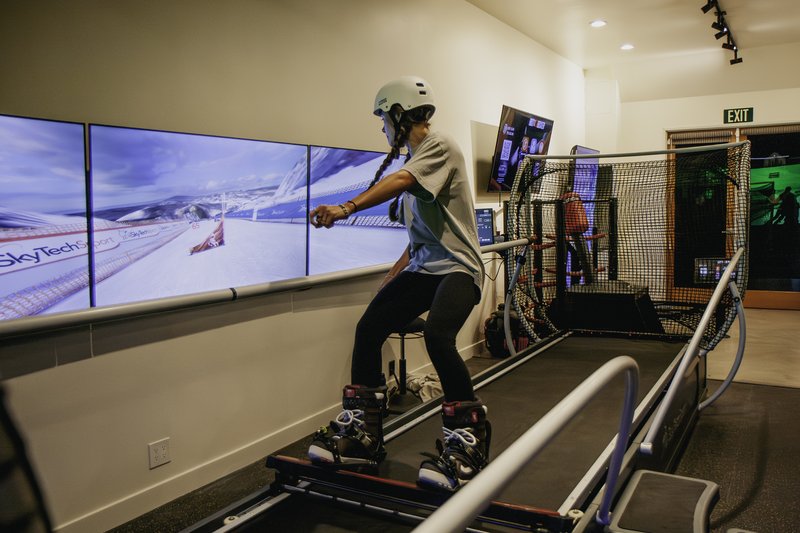
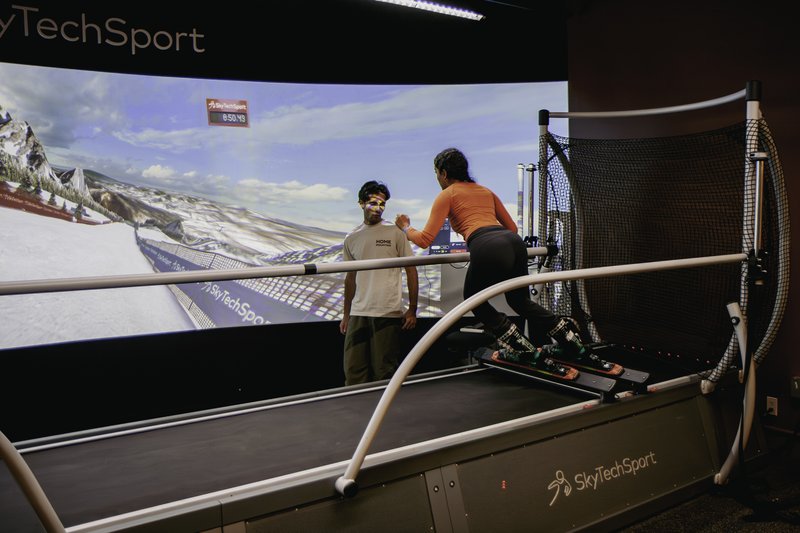
One of the most effective ways to accelerate your progress in beginner ski lessons is to reduce the number of variables you're dealing with on the mountain. When you're cold, distracted by the chairlift queue, and managing unfamiliar equipment all at once, the body struggles to encode new movement patterns efficiently. Indoor ski simulator training removes the environmental noise entirely, letting you focus on posture, edge control, and weight transfer in a warm, controlled environment. At Home Mountain Ski Club, our ski simulator sessions are guided by qualified coaches who tailor the terrain simulation to your current level — starting with gentle, forgiving slopes and progressively introducing steeper gradients and varied conditions as your technique improves. Many of our members use simulator sessions in the weeks before their first resort lesson, and their instructors on the mountain consistently comment on how quickly they pick up the fundamentals.
Choosing Between Group and Private Lessons
Both options have genuine merit, and the right choice depends on your learning style and budget. Group lessons are sociable, often more affordable, and create a low-pressure environment where you can see others working through the same challenges — which is genuinely reassuring. Private lessons offer undivided attention, allow the instructor to address your specific movement habits immediately, and tend to produce faster technical progress. Many beginners opt for one or two private lessons to establish the fundamentals, then transition into group lessons once they're comfortable. If you're returning to skiing after a long break, a single private lesson is often the most efficient way to diagnose what you've forgotten and rebuild from there.
What to Wear and Bring to Your First Lesson
Appropriate kit makes a real difference to how much you enjoy and absorb from beginner ski lessons. A well-fitting helmet is non-negotiable — most ski schools require one and rental helmets are widely available. Goggles protect your eyes from wind and UV glare and are far more effective than sunglasses on the mountain. Warm, moisture-wicking base layers under waterproof ski trousers and a jacket will keep you comfortable without overheating when you're working hard. Gloves should be waterproof and ideally padded at the palm — you will use your hands to push yourself up from the snow. Avoid jeans and cotton layers, both of which become cold and heavy when damp. If you're renting equipment, book it in advance and ask the rental shop to fit your boots with care — poorly fitted ski boots are the single biggest source of beginner discomfort and inhibited technique.
Building on Your Lessons Between Resort Trips
The gap between ski holidays is where most beginners lose the muscle memory and movement patterns they worked hard to develop on the slopes. Regular indoor training during that off-season window keeps your body familiar with the stance, the edge-setting sensation, and the hip-forward posture that skiing demands. At Home Mountain Ski Club, our year-round training programmes are designed precisely for this: whether you're a complete beginner working toward your first green run or an intermediate skier polishing parallel turns, consistent simulator sessions build the muscle memory that makes every resort lesson more productive. Balance training on our BalancePlay Pro platform also complements ski-specific work by developing the reactive stability that keeps you upright when the terrain gets unpredictable.
Ready to Start Your Ski Journey?
Book a beginner session at Home Mountain Ski Club and build real skiing confidence before you reach the mountain.
Discounted Packages! →