

How to Ski Steeps with Confidence: A Step-by-Step Guide
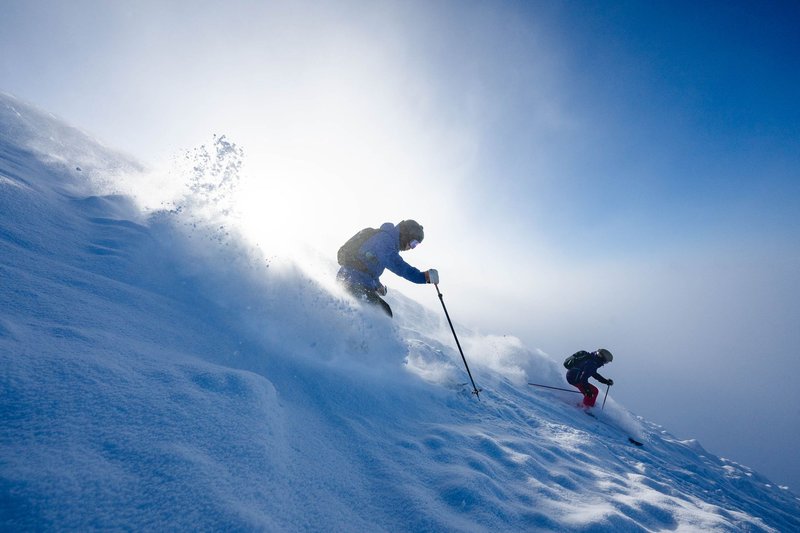
There is a particular feeling every skier knows: standing at the top of a run that looks far steeper than it did on the trail map, poles planted, heart rate climbing. Whether you are an intermediate skier peering down your first black diamond or an advanced rider pushing into double-fall-line terrain, steep slopes have a way of making confident people feel like beginners. The good news is that confidence on steeps is not a personality trait — it is a skill set. With the right technique, the right mental approach, and smart off-slope training, you can learn to look at a steep pitch and feel ready rather than rattled.
Why Steeps Feel So Different (And Why That Is Normal)
On a steep slope, gravity amplifies every input you make. A small lean too far back and your skis shoot out ahead of you. Too much hesitation and you stall mid-turn. The pitch also changes your visual perspective: a 35-degree slope looks almost vertical when you are standing on it, which triggers a defensive instinct to sit back and hold on. Understanding this instinct is the first step to overcoming it. Your body is not broken — it is reacting predictably to an unfamiliar stimulus. Once you accept that, you can start working with your nervous system rather than against it.
The Core Techniques That Unlock Steep Terrain
Successful steep skiing comes down to a handful of fundamental movements executed consistently under pressure. First, keep your weight centered or slightly forward over the balls of your feet — never in the back seat. Second, commit to each turn initiation by pressing the downhill edge into the snow early and decisively. Third, use a strong, well-timed pole plant to trigger each new turn; on steeps the pole plant is not optional decoration, it is your metronome. Fourth, keep your upper body facing down the fall line even as your skis carve across it — this separation between your hips and your ski tips is what gives you control rather than letting the slope control you. Finally, control your speed through the shape of your turns, not by skidding to a stop. Round, complete turns bleed speed gradually and keep you fluid.
Building the Right Mindset Before You Drop In
Technique only works when your mind is calm enough to execute it. Visualization is one of the most underused tools in recreational skiing. Before you push off, spend thirty seconds mentally skiing the line you intend to take: see your pole plants, feel your edges engage, picture clean turn shapes. Elite athletes use this process routinely, and it is equally effective for club-level skiers. It is also worth managing your exposure progressively. Do not go from comfortable groomed blues straight to a mogul-covered black. Find a groomed steep run first, ski it slowly with deliberate technique, then gradually increase your tempo. Confidence is built in layers, not leaps.
How Indoor Simulator Training Accelerates Your Progress
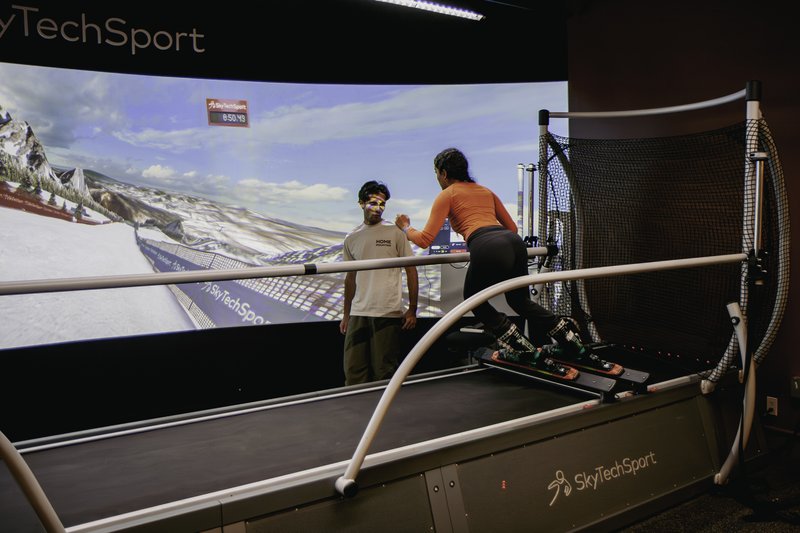
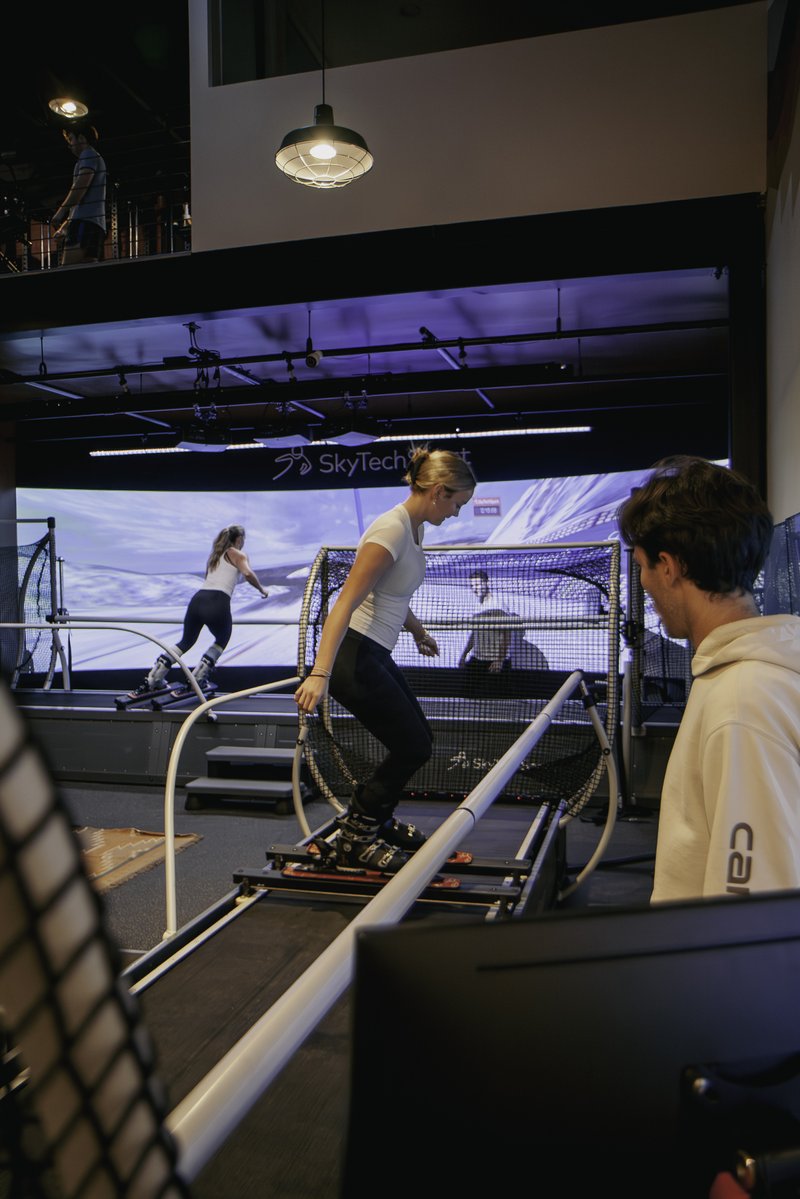
One of the biggest barriers to improving on steeps is repetition. You might get four or five runs on challenging terrain in a full day on the mountain, and fatigue or weather can compromise the quality of each one. Indoor training on a ski simulator solves this problem directly. At Home Mountain Ski Club, our SkyTechSport ski simulators let you practise the precise movements that steep skiing demands — edge pressure, weight distribution, pole timing — in a controlled, low-stakes environment. You can pause, reset, and repeat a single movement pattern dozens of times in an hour. Instructors can observe your form in real time and give immediate feedback, which is far more effective than a brief debrief at the bottom of a chairlift. Many of our members report that a handful of simulator sessions produce visible improvement the very next time they hit real steep terrain.
Balance and Stability: The Hidden Foundation
Strong technique on steeps also depends on underlying balance and proprioception — your body's sense of where it is in space. If your ankles, knees, and core are not communicating well, your movements will always feel a step behind the slope. This is where cross-training tools like the SkyTechSport BalancePlay Pro become genuinely valuable for skiers. Regular balance board and stability training builds the reactive muscle memory that lets you make micro-adjustments automatically, freeing your conscious mind to focus on line choice and rhythm rather than just staying upright. Think of balance training as the foundation that your technique is built on — the steeper the terrain, the more that foundation matters.
A Simple Practice Plan to Get You Slope-Ready
If you want a structured path to skiing steeps with confidence this season, consider the following approach. In the weeks before your ski trip, commit to two or three balance and stability sessions per week using a platform like the BalancePlay Pro. Add one or two ski simulator sessions at Home Mountain Ski Club per week, focusing specifically on edge engagement and upper-lower body separation. When you arrive at the resort, spend your first morning warming up on terrain you find comfortable, then introduce one challenging steep run mid-morning when your legs are fresh and your mind is sharp. Ski it slowly and deliberately, prioritising technique over speed. Each subsequent day, push slightly further outside your comfort zone. Progress in skiing is rarely dramatic; it is incremental, cumulative, and deeply satisfying when it arrives.
Ready to Train for the Steeps?
Book a simulator session at Home Mountain Ski Club and build real technique before the season starts.
Book Now! →