

Indoor vs Outdoor Ski Lessons: Which Is Right for You?
Whether you're a first-timer lacing up boots for the very first time or a seasoned skier chasing a tighter parallel turn, one question comes up again and again: should you take your lessons indoors or head straight to the mountain? The answer is rarely black and white. Both environments offer genuine advantages, and understanding where each one shines can help you build skills faster, spend your money wisely, and actually enjoy the process of learning.
What Outdoor Ski Lessons Do Best
There is no substitute for real snow when it comes to reading terrain, adapting to variable conditions, and developing the situational awareness that defines a confident skier. Outdoor lessons at a resort or day area put you on actual slopes with changing light, wind, and grooming patterns. Instructors can guide you through real-world challenges such as icy patches, moguls, and busy lift lines. For intermediate and advanced skiers, this contextual experience is invaluable. The mountain teaches lessons that no controlled environment can fully replicate.
That said, outdoor lessons come with real-world friction. Weather cancellations, long lift queues, crowded beginner areas, and the sheer physical exhaustion of cold temperatures can all slow the learning curve. For a nervous first-timer, being surrounded by fast-moving skiers on a busy weekend slope is not always the most conducive environment for absorbing technique.
Where Indoor Ski Training Has a Clear Edge
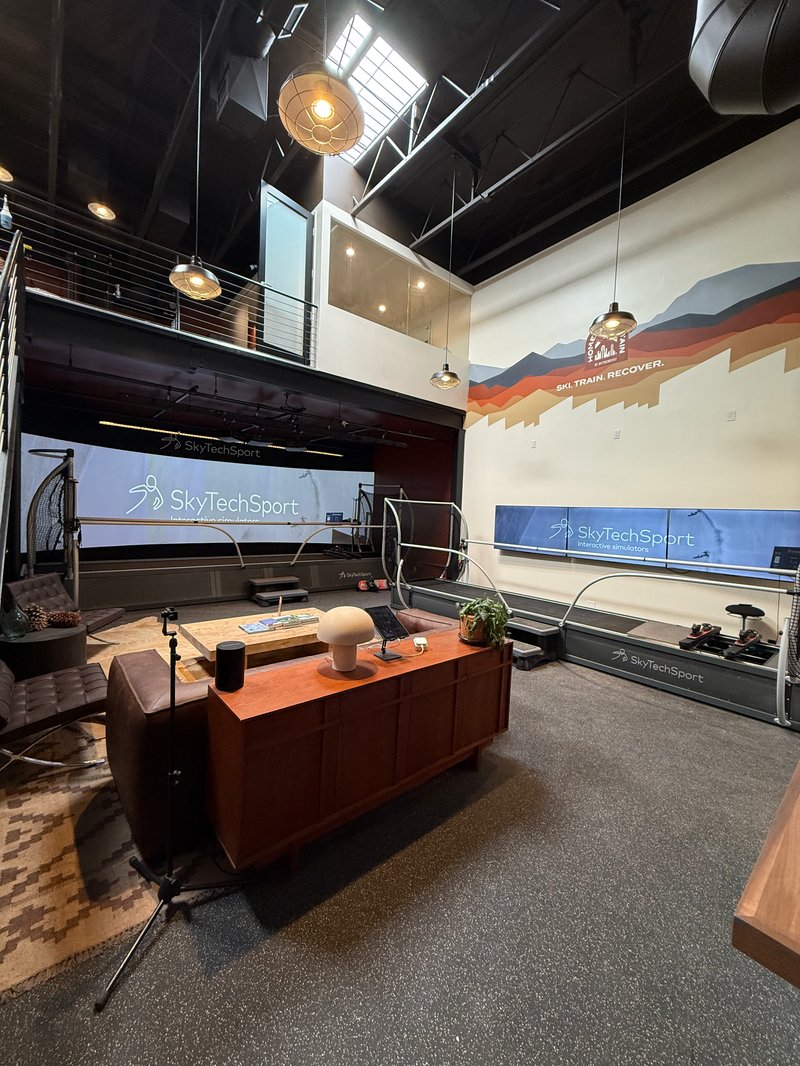
Indoor ski training facilities like Home Mountain Ski Club remove the variables that so often interrupt progress outdoors. Sessions take place in a controlled, distraction-free environment where instructors can focus entirely on your body mechanics without competing with wind chill, other skiers, or a ticking lift-ticket clock. The pace is set by you, not by the mountain.
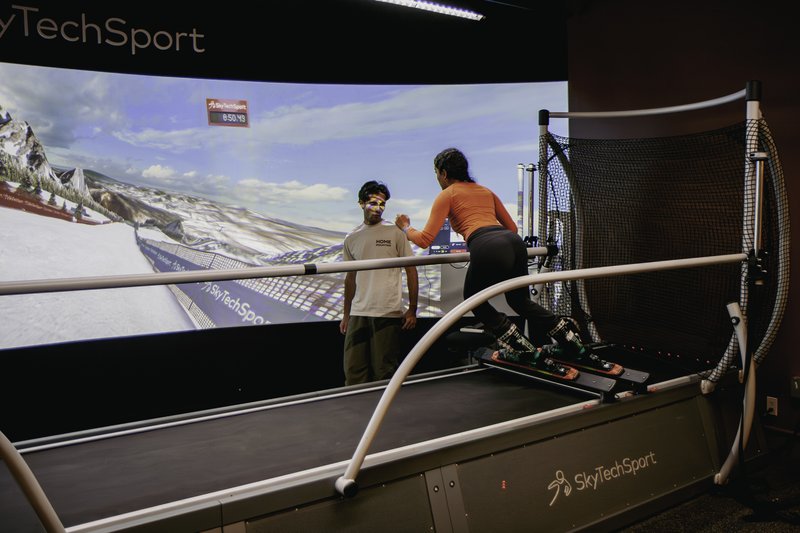
At the core of the Home Mountain experience are SkyTechSport ski and snowboard simulators. These professional-grade machines replicate the motion and muscle engagement of skiing on real snow, allowing instructors to observe your stance, weight distribution, and edge control from close range and in real time. Because the simulator keeps you in one place, coaches can make micro-corrections immediately rather than shouting adjustments down a slope. This tighter feedback loop is one of the single biggest accelerators for beginner and intermediate progress.
The Beginner Case: Why Starting Indoors Makes Sense
For complete beginners, the case for starting indoors is compelling. Learning to balance on skis for the first time is genuinely hard, and doing it at the top of a beginner run while cold and nervous adds layers of difficulty that have nothing to do with skiing itself. On a ski simulator, you can spend an entire session just nailing the athletic stance and getting comfortable shifting weight from ski to ski without the anxiety of movement or fall risk. You arrive at the mountain having already built the foundational habits that instructors typically spend the first half of an outdoor lesson establishing.
Parents booking lessons for younger children find this especially valuable. Kids can try the equipment and the sensation in a warm, low-stakes setting, which dramatically reduces first-day jitters and shortens the time it takes to get them genuinely sliding and turning on snow.
Intermediate and Advanced Skiers: Off-Season Edge Work
Indoor training is not just for beginners. Intermediate skiers looking to break through a plateau and advanced skiers maintaining form between seasons get tremendous value from focused simulator sessions. Because you can repeat the same movement pattern hundreds of times in a single hour without riding a chairlift between runs, muscle memory builds quickly. Coaches at Home Mountain use the SkyTechSport ski and snowboard simulators to isolate specific technical issues such as hip angulation, early edge engagement, or asymmetrical weighting and drill them in a way that simply is not practical on a real slope.
For racers and performance-focused skiers, indoor sessions during October and November, before most resorts open, mean arriving on the mountain already sharp rather than spending the first few days of the season shaking off rust.
Combining Both Approaches for Maximum Progress
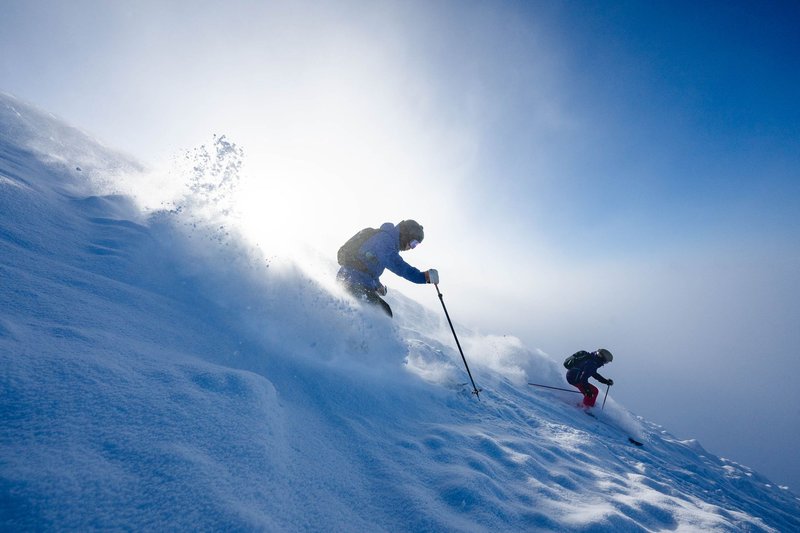
The most effective training strategy is not indoor versus outdoor, it is indoor and outdoor used together with intention. A typical progression at Home Mountain pairs simulator-based technique sessions during the week with weekend or trip-based outdoor skiing. Instructors communicate specific goals for each environment so that what you work on indoors has a direct application on the hill. Students who train this way consistently report that they progress through skill levels faster and feel more confident when conditions get challenging.
Think of indoor training as the practice room and the mountain as the performance stage. Elite athletes in almost every discipline separate deliberate, focused practice from real-game or real-event exposure, and skiing is no different. The simulator gives you the repetitions and the coaching feedback; the mountain gives you the full experience.
Practical Considerations: Cost, Convenience, and Commitment
One often-overlooked advantage of indoor lessons is accessibility. Getting to a ski resort involves travel time, accommodation, equipment rental, and lift tickets, costs that add up quickly for a family or a beginner who is not yet certain skiing is for them. A session at Home Mountain requires only your time and comfortable athletic clothing. It is also available year-round, which means a summer introduction to skiing is entirely feasible before you commit to a winter trip. For busy adults who can only carve out an hour on a Tuesday evening, indoor training fits into real life in a way that resort lessons simply cannot.
Ultimately, both indoor and outdoor ski lessons serve essential roles in a well-rounded training journey. The right choice depends on where you are in your development, what your goals are, and how much time you have before your next trip to the mountain. What is clear is that indoor simulator training, done well, is not a compromise or a consolation prize. It is a genuinely effective and increasingly popular way to build real skiing ability all year long.
Ready to Train Smarter This Season?
Book an indoor ski lesson at Home Mountain and start building real mountain skills today.
Book Now! →